+35797909751

Cost figures are indicative planning ranges rather than quotes — they shift with season, guest count, and inclusions. For a full breakdown by category, see our Cyprus wedding cost guide.
| Venue type | Typical capacity | Indicative cost | Key advantage | Main constraint |
|---|---|---|---|---|
| Hotel/resort | 50–250+ | €80–180 per guest | Turnkey catering, AV, and guest rooms | Less creative flexibility |
| Private villa | 20–100 | €8,000–25,000 (rental) | Total privacy, multi-day use | Higher production load |
| Beach/seafront | 40–150 | Varies by site | Sea backdrop, golden-hour light | Wind, permits, shared access |
| Vineyard/stone village | 30–80 | €5,000–15,000 | Authentic and distinctive | Transport, curfews, logistics |
Beach and seafront venues
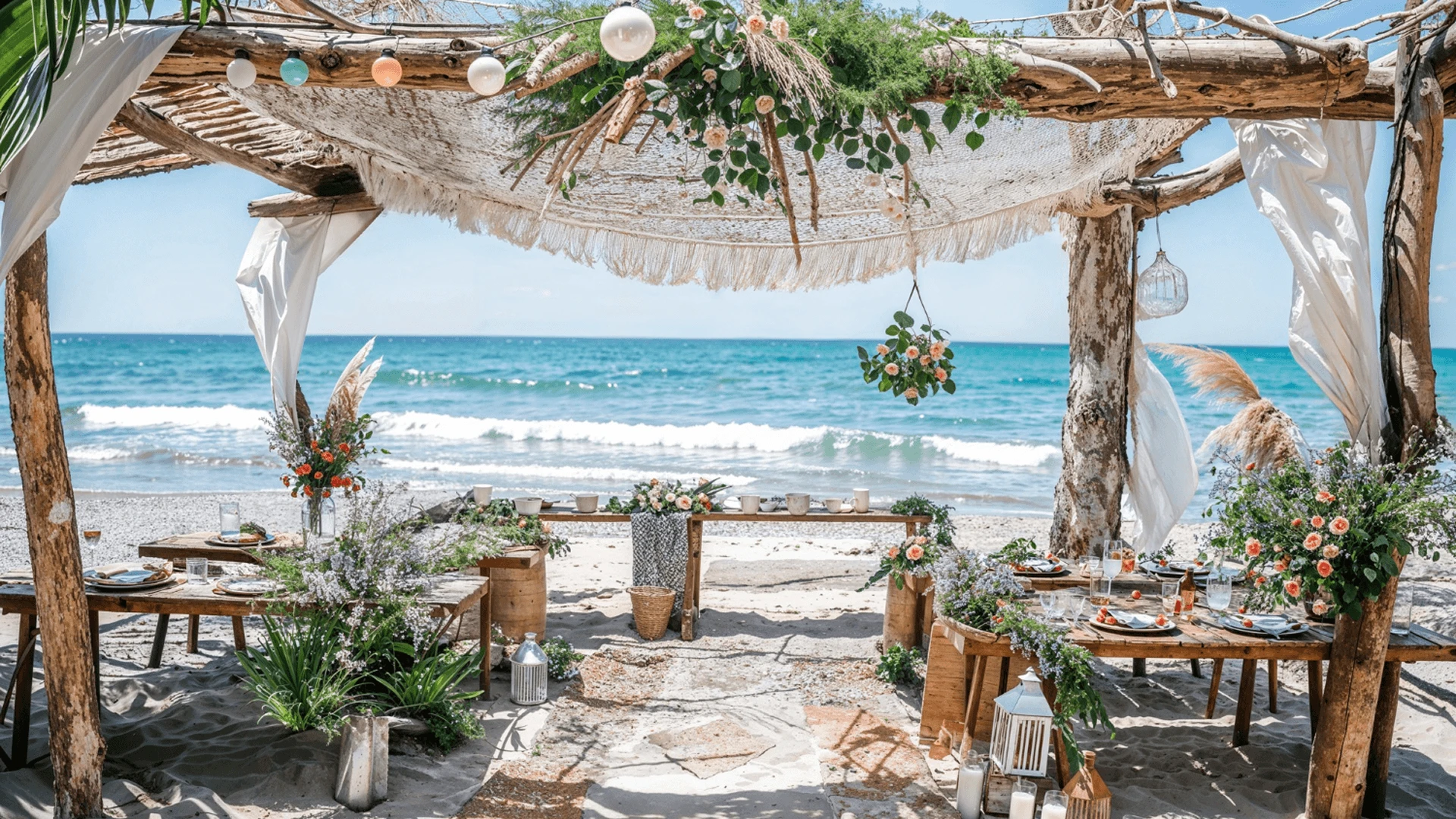
The most requested category, and the most demanding. A beach wedding in Cyprus means a ceremony with the Mediterranean as backdrop — ideally at golden hour, ideally with structured shade for guests, ideally on a stretch of coastline that isn’t shared with public swimmers. The reality is that most public beaches require permits and offer no privacy. The best beach weddings happen at hotel-owned beachfront sites or private coastal venues with their own ceremony areas — Ayia Napa, Paphos, and parts of Limassol all have these. Wind is the variable everyone underestimates; lightweight decor, suspended florals, and sand-friendly footwear are not optional.
Venues worth shortlisting: Columbia Beach Resort at Pissouri Bay, between Limassol and Paphos, holds reception spaces for roughly 20 to 200 guests and includes the All Saints Chapel, built to resemble early Byzantine architecture, alongside beachfront and terrace reception areas. Along the Paphos coastline, Almyra and Annabelle offer seafront ceremony settings within walking distance of the harbour. On the Akamas side, Anassa at Latchi is the island’s benchmark for premium coastal weddings.
Villa and private estate venues
The fastest-growing category for couples who want full creative control. A villa wedding gives you the venue for two or three days, the ability to host welcome dinners and morning-after brunches in the same setting, and a degree of privacy no hotel can match. The trade-off is production load. Villas rarely come with in-house catering, AV, or coordination — every element is brought in. The budget should reflect that. Villas across the Limassol hills, the Paphos coastline, and the Troodos foothills offer some of the most distinctive settings on the island. For couples drawn to this format, our guide to luxury villa weddings goes deeper into what a multi-day villa celebration actually involves — and where the budget goes at this level.
What to look for: private villa estates are rarely branded wedding venues, so shortlisting usually happens through a planner or a villa agency rather than a public directory. The variables that matter most are exclusive multi-day access, a flat area large enough for a marquee or seated dinner, kitchen access or space for a catering tent, generator capacity for outdoor lighting and sound, and enough parking or a shuttle plan. Ask for these in writing before falling in love with the photographs.
Hotel and resort venues
The most predictable choice, and for good reason. Resort venues handle their own catering, AV, guest accommodation blocks, and on-site coordination as part of the package. For couples planning from abroad — especially destination weddings with 60+ guests — this is often the right answer. The compromise is creative latitude. Resort venues run on their own kitchens, their own preferred florists, and their own setup windows. The best results come from couples who choose the resort first and then build the day within its rhythm.
Venues worth shortlisting: Minthis Resort, in the hills above Paphos, hosts ceremonies in the courtyard of a 12th-century Byzantine monastery and receptions in its contemporary clubhouse, with dinner capacity in the region of 120 to 150 guests. In Limassol, Parklane Resort and Amara sit at the premium end of the seafront hotel category, with the ballroom capacity and vendor infrastructure that larger weddings need. Elysium in Paphos remains a long-standing choice for couples who want a chapel and reception on the same grounds.
Heritage, vineyard, and unconventional venues
Cyprus is older than most of its wedding photography suggests. Ancient ruins (where civil permits allow), restored stone villages in the Troodos, vineyard estates near Omodos and Lefkara, hilltop chapels with sea views — these are the venues that produce weddings that don’t look like anyone else’s. They require the most planning. And they reward the most planning.
Venues worth shortlisting: Vasilias Nikoklis Inn, a restored 19th-century family-run inn in the Diarizos Valley about 25 minutes from Paphos, offers a vine-covered courtyard seating up to around 50 guests, a eucalyptus garden for larger ceremonies, and eight rooms on site — one of the earliest countryside wedding venues on the island, hosting since 1983. In the wine country above Limassol, estates around Omodos and the Krasochoria villages host vineyard receptions, and several working wineries in the region take private events by arrangement. Ask early about curfews and guest transport: mountain and village venues almost always have both.

The most requested category, and the most demanding. A beach wedding in Cyprus means a ceremony with the Mediterranean as backdrop — ideally at golden hour, ideally with structured shade for guests, ideally on a stretch of coastline that isn't shared with public swimmers.
Region by region: where exactly to look
Every region of Cyprus has a distinct wedding identity. Choosing the right one is less about which is “best” and more about which matches your guest list and the feeling you want the day to carry.
Wedding venues in Paphos
Paphos is the most established wedding destination on the island, particularly for couples from the UK and Northern Europe. The coastline runs from the historic harbour to Coral Bay and into the Akamas peninsula, with a strong concentration of seafront hotels, private villas in the hills above the town, and small chapels with significant character. Civil ceremonies at Paphos Town Hall and Geroskipou Municipality are among the most efficient on the island for international couples. Paphos suits weddings of 40–150 guests well — large enough for production, small enough to keep the day intimate.
Wedding venues in Limassol
Limassol is the production capital of Cyprus weddings. The city has the strongest concentration of premium hotels, the deepest vendor network (florists, AV companies, live music), and venues that run from the seafront promenade to villa estates in the foothills behind the city. Limassol works for larger weddings — 100 to 300 guests — and for couples who want a wedding that feels closer to a Mediterranean city event than a beach resort. The marina and adjacent venues are particularly strong for evening receptions.
Wedding venues in Ayia Napa and Protaras
The eastern coast offers the clearest turquoise water on the island and the most photogenic beaches. Ayia Napa and Protaras suit couples who want the beach to genuinely be the centrepiece — not a backdrop. The infrastructure is geared toward summer, and the high season (June through early September) can be heavily booked twelve months out. Cape Greco, between the two towns, is one of the most photographed locations in Cyprus for ceremony portraits.
Wedding venues in Larnaca and Nicosia
Larnaca offers the easiest airport logistics for international guests and a quieter, more local wedding atmosphere. Nicosia is rarely a destination wedding choice but works for couples with strong local family ties — particularly for hybrid civil-and-religious weddings tied to specific parishes.
Mountain and inland venues
The Troodos foothills, Omodos, and Lefkara give Cyprus a side most international guests have never seen — stone, pine, cooler air, slower light. Mountain weddings work best between May and early October. Outside those months, weather backup becomes a serious planning factor.
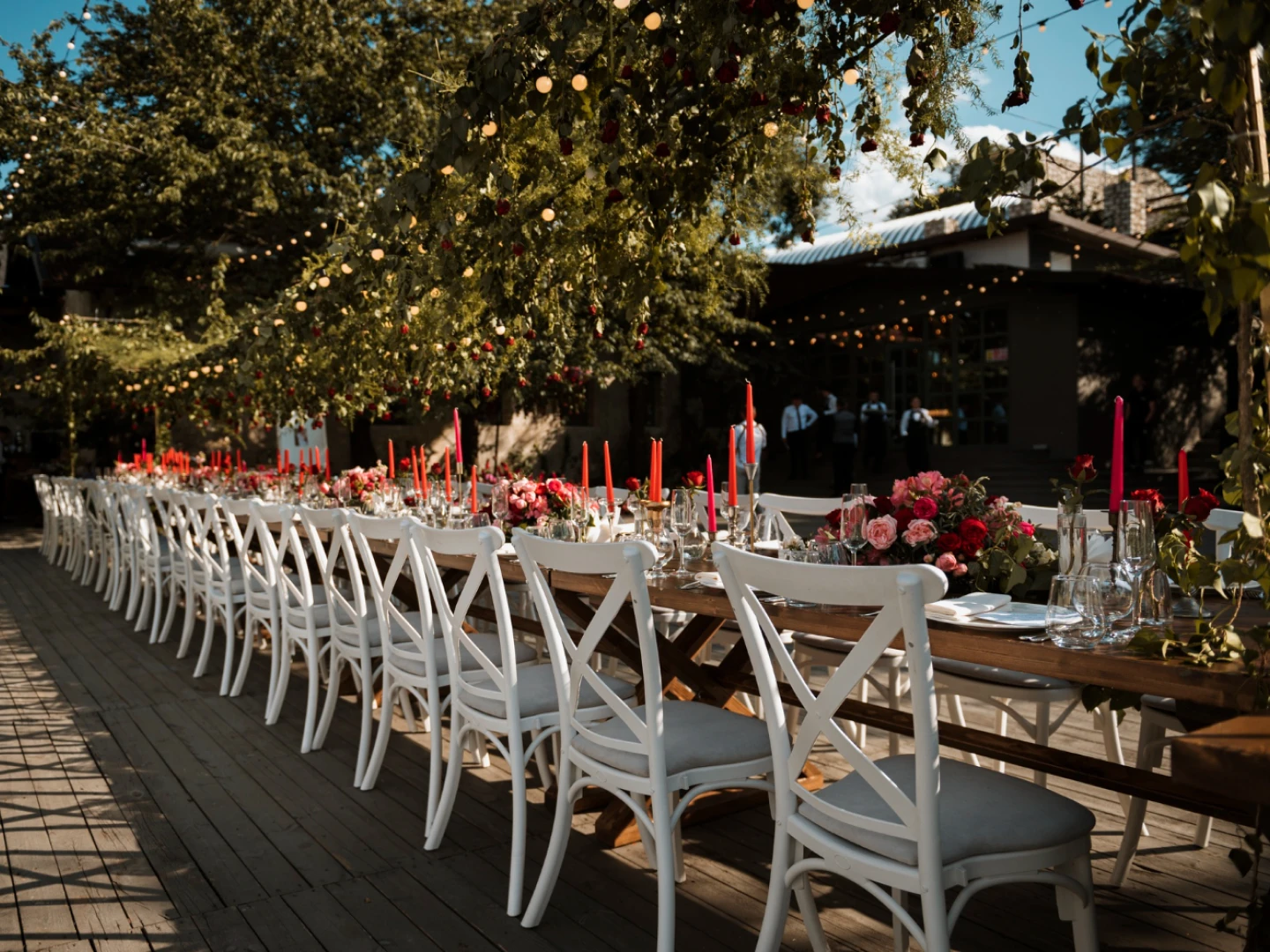
Outdoor villa wedding reception in the Limassol foothills, with long banquet table and candlelight under olive trees.
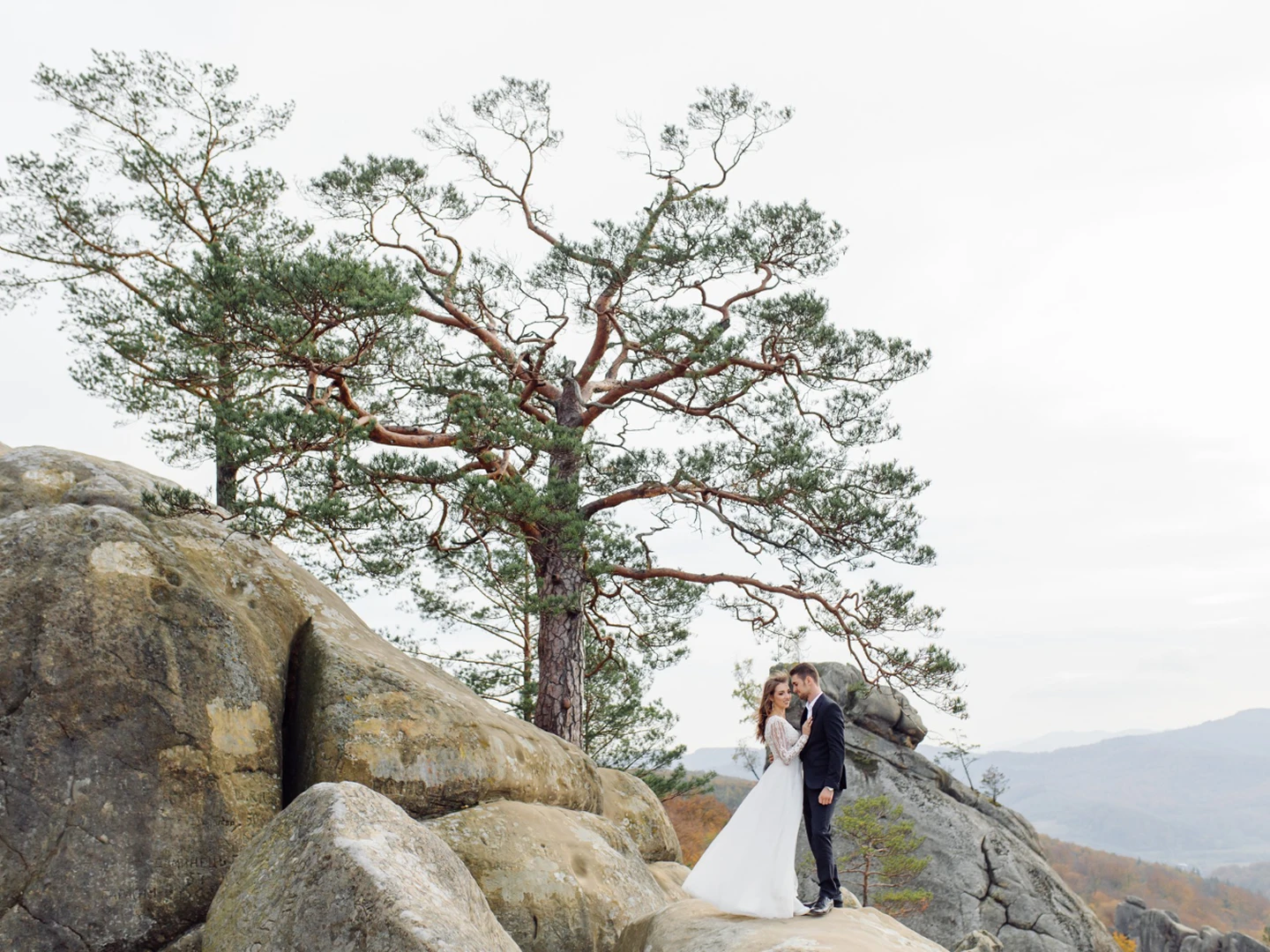
Intimate wedding ceremony in a restored stone courtyard in Omodos village, Troodos region.
Timing: the month decides more than the venue
The wedding season in Cyprus runs from May through October, with shoulder months on either end usable with the right backup plan. The peak is July and August. The sweet spot is everywhere else.
May, early June, late September, and October are the months experienced planners recommend most often. Daytime temperatures sit between 22°C and 28°C, sea temperatures remain swimmable, and the light through golden hour is softer than the harsh midday sun of high summer. July and August are stunning if you can guarantee shaded ceremony areas, climate-controlled reception venues, and a ceremony scheduled for late afternoon onwards. Outdoor ceremonies between 11 am and 4 pm in August are technically possible. We don’t recommend them for guests in suits and floor-length gowns.
The winter window (November through March) is open for symbolic ceremonies and intimate receptions held indoors. It’s also the most affordable. The trade-off is weather variability — rain in November and February is a real possibility, and any outdoor plan needs a covered alternative ready. For a month-by-month breakdown of temperature, cost, and availability, see our guide to the best time for a wedding in Cyprus.
Cyprus-specific planning realities
A Cyprus wedding has practical particularities that domestic weddings in other countries don't have. Knowing them before you sign anything saves money, time, and several difficult conversations.
Legal paperwork for international couples
Civil weddings in Cyprus are governed by the Marriage Law of 2003 and conducted by Marriage Officers at the municipality of your choice. The standard waiting period after submitting a Notice of Marriage is fifteen clear days. A Special Licence — an additional fee paid to the Marriage Officer — can reduce that to as little as one to three working days. Couples should plan to submit paperwork in person before the wedding date and bring originals: valid passports, certificates of no impediment from your home country (often with an apostille for non-EU origins), and proof of termination of any previous marriages. Documents not in English or Greek must be translated by an authorised translator. We recommend confirming current municipality fees and document lists directly with the chosen town hall — requirements vary slightly by municipality and are updated periodically.
A Catholic-only ceremony is not legally binding in Cyprus without a separate civil registration. Anglican ceremonies, by contrast, can be legally binding because Anglican ministers are authorised to register marriages with the state. Orthodox and other faiths follow their own protocols and should be coordinated with both the church and the municipality.
Permits for outdoor and public venues
Beach weddings on public beaches require permits from the relevant municipality, and many of the most photographed stretches of coastline are public. Private hotel beaches and licensed venues already hold the permits — using them is the simplest path. For public spaces, applications are typically made through the local municipality and need to be submitted weeks in advance. Fireworks and pyrotechnics carry separate permit requirements that vary by region and season.
Guest accommodation logistics
A destination wedding lives or dies on guest experience. Cyprus is a small island with concentrated tourism — that’s a strength when blocks can be negotiated, and a constraint in July and August when availability tightens. Booking guest accommodation should happen in parallel with the venue contract, not after. For weddings of 60+ guests, we usually recommend selecting a primary hotel within fifteen minutes of the venue and securing a block of rooms twelve to fifteen months in advance.
What couples consistently get wrong
The same mistakes appear across consultations every season. Five matter more than the rest.
- Booking the venue before the season. Couples fall in love with a venue, sign, and then discover the date they wanted is unavailable, or the season they were imagining doesn’t work for that space. Decide the month first — accounting for the heat, the light, and your guests’ travel — and then choose the venue.
- Underestimating the villa production load. A beautiful villa is not a turnkey wedding venue. Catering, bar, AV, lighting, sanitation, generators for outdoor zones, climate consideration for indoor areas — all of it is brought in. The venue cost is the starting point, not the total.
- Forgetting the heat plan. Summer ceremonies without structured shade are uncomfortable for guests and difficult for photography. Welcome drinks should be in the shade. Aisle arrivals should not require guests to walk fifteen minutes in the midday sun. A heat plan is a real document with specific timing.
- Treating paperwork as a last-month task. Document collection, apostilles, sworn translations, and embassy confirmations take weeks. Couples who start this six weeks before the wedding pay rush fees and lose sleep.
- Choosing the venue for the photographs alone. The most photographed venues on Instagram are not always the most comfortable for guests, the easiest for catering, or the most cost-efficient to produce. A venue should look beautiful on the day, but it also needs to function for eight hours of celebration. That last stretch — the reception itself — is worth planning as early as the venue: our wedding entertainment ideas for Cyprus cover the show programming and live acts that keep those eight hours moving.
What to ask before you sign a venue contract
Most venue contracts are signed in the warm afterglow of a site visit. The questions that matter are the practical ones.
- What is the maximum guest capacity for seated dining versus a standing reception, and where is the threshold at which the venue feels stretched?
- Is in-house catering required, or can outside catering be brought in? If outside catering is allowed, are there approved vendor lists?
- What is the wet-weather contingency, and is the alternative space included in the price?
- What time do music and amplified sound have to end? Coastal and residential-adjacent venues often have stricter cut-offs than venues expect to disclose upfront.
- Are there parking and shuttle logistics for guests, particularly for villa and mountain venues without direct access?
- What is the cancellation and rescheduling policy, and how does it apply to weather-related changes?
- Are there hidden costs for setup days, breakdown, electricity surcharges, or after-hours staff?
A venue that answers these clearly is a venue worth shortlisting.

Plan your dream wedding in Cyprus
We help couples build that clarity in the first consultation

Common questions about wedding venues in Cyprus
Which are the best wedding venues in Cyprus?
There is no single best venue — there are best matches. For seafront ceremonies, Ayia Napa and Paphos lead, with Columbia Beach Resort at Pissouri among the most established coastal options. For heritage character, Minthis Resort and Vasilias Nikoklis Inn are frequently shortlisted. For full creative control, villas in the Limassol and Paphos hills lead. For larger weddings with strong vendor infrastructure, Limassol leads. We narrow the shortlist based on guest count, season, paperwork route, and the feeling you want the day to carry.
Is Paphos or Ayia Napa better for a beach wedding?
Both work. Paphos suits couples who want the beach as part of a wider venue experience — hotel beaches, coastal cliffs, the Akamas backdrop. Ayia Napa suits couples who want the beach itself to be the centrepiece, particularly for high-season weddings where guests will use the area for several days. Ayia Napa runs hotter in the height of summer and books out earlier.
What should couples ask before booking a wedding venue?
Capacity for both seated and standing formats, catering rules and approved vendors, wet-weather alternative space, music cut-off times, parking and transport logistics, cancellation policy, and any cost not included in the headline venue fee. A venue that answers these clearly and in writing is a venue that has run weddings before.
How far in advance should we book a wedding venue in Cyprus?
For peak season (June through early September), twelve to eighteen months ahead for premium villas and hotel venues. For shoulder season (May, late September, October), nine to twelve months ahead. For winter weddings and weekday celebrations, six to nine months can work — but the popular Saturdays go first regardless of season.
Do we need a wedding planner if the venue includes coordination?
Venue coordinators manage the venue, not the wedding. They oversee timing, setup, and breakdown within their space — they do not source florists, manage vendor contracts across multiple suppliers, handle guest transport, or build the timeline for your day. For destination weddings and multi-vendor productions, a dedicated planner pays for themselves in problems prevented before they reach you.
Can we hold both the ceremony and reception at the same venue?
In most beach hotels, villa estates, and resort venues — yes, and it’s the simplest logistical choice. The advantage is one transport plan, one setup window, and continuity of the guest experience. The trade-off is that the space has to transform between ceremony and reception, which requires a clear staging plan and often a cocktail hour scheduled in a separate area while the main space is reset.
Where to go from here
The right wedding venue in Cyprus is the one that matches your guest list, your season, your paperwork route, and the feeling you want the day to carry. Once those four are clear, the shortlist narrows itself. We help couples build that clarity in the first consultation — and from there, the venue conversation becomes much shorter.
If you’re planning a wedding in Cyprus and want a planner who knows the island’s venues at the level of detail this guide hints at, start with a free consultation. We’ll help you shortlist three or four venues that genuinely fit, not thirty that look pretty on a brochure.
Last reviewed: July 2026. Civil ceremony fees, special licence costs, and document requirements vary by municipality and may update — confirm current details directly with your chosen town hall before submitting paperwork.