 +35797909751


Cyprus wedding seasons at a glance
Price levels are relative to peak-season rates across venues and vendors; the off-peak window typically runs 30–40% below summer pricing for the same suppliers. For how the season feeds into the full picture — catering, vendors, hidden costs — see our complete Cyprus wedding budget breakdown.
| Month | Air temp | Sea temp | Rain risk | Price level | Best suited to |
|---|---|---|---|---|---|
| April | 18–24°C | 18–20°C | Possible | Shoulder (€€) | Inland venues, green landscapes |
| May | 22–26°C | 21°C | Very low | Shoulder (€€) | Lush greenery, comfortable outdoor ceremonies |
| June | 28–32°C | 23–25°C | Zero | Peak (€€€) | Beach weddings, long golden hour |
| July–August | 32–36°C coast, up to 40°C inland | 26–28°C | Zero | Peak (€€€) | Evening and sunset receptions only |
| September | 28–30°C | 25–27°C | Low | Peak (€€€) | Warm sea, softer light |
| October | 23–26°C | 22–24°C | Low, rising late | Shoulder (€€) | Best overall balance of light, heat, and price |
| November–March | 17–22°C | 16–20°C | Moderate to high | Off-peak (€) | Intimate indoor and symbolic ceremonies |
Why does the month decide more than people expect
A Cyprus wedding lives in the weather. The light, the temperature at 4 pm, the wind on the coast, whether your guests can sit through a 30-minute ceremony in suits and floor-length gowns — all of it depends on the calendar. Couples planning from abroad sometimes underestimate this and pick a date around availability rather than climate. The result is either a brilliant day or a difficult one, and the difference between them is usually two or three weeks on either side of peak summer.

The best wedding date in Cyprus is the one that lets your guests focus on you — not on the heat, the wind, or whether the ceremony will be moved indoors.
Cyprus wedding weather by month
Spring: April and early May
Daytime highs: 18–24°C in April, rising into the mid-20s by mid-May.
Sea temperature: Still cool — around 18–20°C in April, climbing to 21°C by late May.
Rain risk: Possible in April, low by mid-May.
April is a transitional month. The island is green, wildflowers are out, and inland venues — the Troodos foothills, the wine villages, restored stone estates — look their best. Coastal venues work, but evenings can be cool enough that guests need a wrap or jacket. We schedule ceremonies for the middle of the afternoon in April, not late, so the light is still warm when the photography happens.
May is when Cyprus shifts decisively into wedding season. Daytime temperatures sit comfortably between 22 and 26°C, the chance of rain drops to nearly zero, and the daylight extends past 8 pm. May suits couples who want a wedding that feels lush, fresh, and slightly less heat-loaded than peak summer. It’s also one of the months that books out earliest — usually twelve to fifteen months in advance for prime Saturdays.
Early summer: June
Daytime highs: 28–32°C on the coast, hotter inland.
Sea temperature: 23–25°C — fully swimmable.
Rain risk: Effectively zero. June is one of the driest months on the island.
June is the most popular wedding month in Cyprus, and the reasons are practical: virtually guaranteed sunshine, long evenings (sunset around 8 pm), warm sea, and weather predictable enough that an outdoor plan rarely needs a backup. The trade-off is heat. Late June ceremonies should be scheduled for the last two hours of daylight rather than the middle of the afternoon. Shade structures, cold welcome drinks, and a heat-aware timeline matter.
For couples who want the full Mediterranean summer experience without August’s intensity, June is the sweet spot. Premium venues and villas command peak pricing in this window. Summer is also when private villas with pools become the most sought-after format of all — our luxury villa wedding guide covers what a multi-day villa celebration involves and why these dates disappear first.
High summer: July and August
Daytime highs: 32–36°C on the coast, 35–40°C inland in Nicosia and the central plain.
Sea temperature: 26–28°C — the warmest of the year.
Humidity: August is the most humid month; dew points climb into the mid-20s, making the heat feel heavier than the temperature suggests.
Rain risk: None.
Wind: July is the windiest summer month on the coast — a benefit for guest comfort, a complication for ceremony decor.
July and August are objectively beautiful months in Cyprus — clear skies, warm sea, long golden evenings. They’re also genuinely hot. An outdoor ceremony at 2 pm in August is uncomfortable for everyone in formalwear, and we don’t recommend it. What works in high summer is a different rhythm: ceremony from 6 pm onwards, cocktails at sunset, dinner under the stars, dancing late into the night. The Mediterranean evening is the asset; the midday is the constraint. That evening rhythm is where the entertainment does its work — our wedding entertainment ideas for Cyprus cover the show acts, live music, and sunset-to-late-night programming that carry a summer reception.
Guests should know they’re walking into real heat. Welcome bags with water, hand fans, and parasols at the ceremony are not decorative gestures — they’re functional. Indoor reception spaces should be confirmed climate-controlled, not just “air-conditioned” in vague terms. For villa weddings in particular, the ability to cool indoor zones in August is a question worth asking before signing the venue contract.
July and August also command the highest prices on the island and book out earliest. If you want a specific venue on a specific summer Saturday, eighteen months ahead is not too early.
The velvet season: September and October
Daytime highs: 28–30°C in September, falling to 23–26°C by mid-October.
Sea temperature: 25–27°C in September, 22–24°C in October — still very swimmable.
Rain risk: Low through September, rising slightly by late October.
Humidity: Drops noticeably from August levels — air feels lighter.
September and October are what experienced planners often quietly recommend as the best months for a Cyprus wedding. The light has softened, the heat has eased, the sea is still warm enough for honeymoon swimming, and the photography window is generous. Sunsets shift from late (8 pm in early September) to earlier (around 6 pm by late October), which compresses the ceremony timeline slightly but also means golden hour arrives within the natural rhythm of the day.
October in particular is a planner’s favourite. It’s still warm enough for sleeveless dresses and outdoor receptions, the crowds of high summer have thinned, and shoulder-season pricing returns to villas, hotels, and many vendors. By late October, the evenings can be cool — a light wrap for the women in the party is sensible.
Shoulder and winter: November through March
Daytime highs: 17–22°C, with cooler inland and mountain temperatures.
Sea temperature: Drops from 20°C in November to around 16–17°C by January–March. Rain risk: Real. Most of Cyprus’s annual rainfall arrives between November and March, with December and January the wettest months.
Daylight: Shortest in December (sunset around 4:45 pm).
The winter window is not for outdoor beach weddings. It is excellent for symbolic ceremonies held indoors, intimate villa weddings with covered ceremony spaces, micro-weddings of 20–40 guests, and elopements. Pricing across the island drops meaningfully — often 30–40% below summer rates for the same venues and vendors. The light through November is still warm; January and February days can be crisp and bright when the rain breaks.
The condition for a winter wedding in Cyprus is a serious indoor or covered alternative. Any outdoor element needs a covered fallback ready to deploy on twenty-four hours’ notice. With that backup in place, December and January weddings can be some of the most distinctive — and most personal — of the year.

Sunset wedding reception on a Limassol seafront terrace in late June, with string lights and floor-length linen tablecloths.
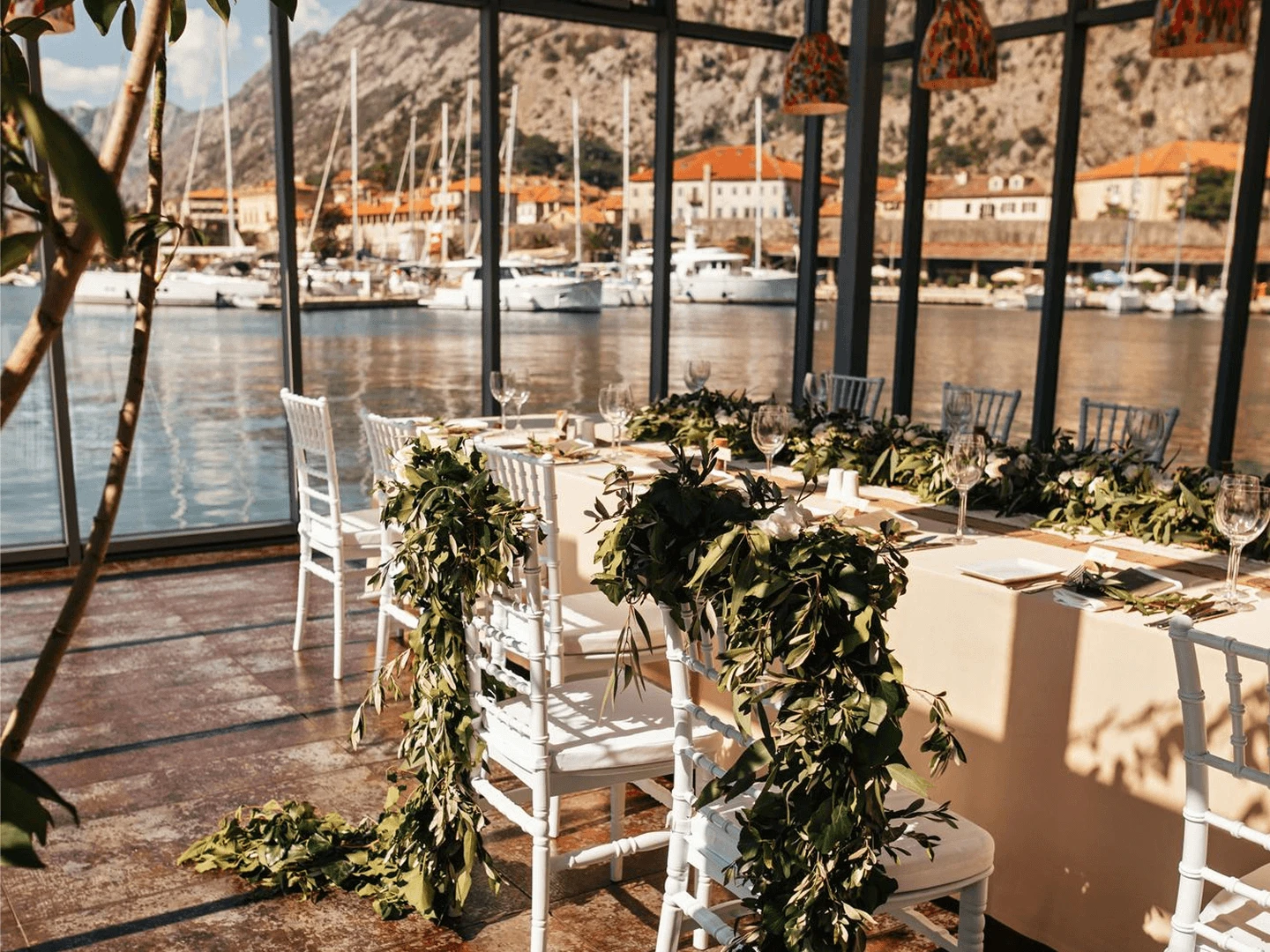
Intimate covered villa wedding ceremony in November in the Paphos hills, with candlelight and twelve guests seated under draping.
What month suits your wedding format?
The right month depends on the kind of wedding you're planning, not on a generic "best" answer.
- Beach wedding with 60+ guests: Late May, June, late September, or early October. You want the water visible, the guests comfortable, and the ceremony before the midday heat or after it.
- Sunset ceremony at a hotel or resort: June, July, August, or September. The longest evenings give you the most flexibility to time the ceremony exactly to golden hour.
- Villa wedding with multi-day programme: Late May, June, September, or October. You want your guests to stay at the hotel for two or three days, which means the weather should be nice enough for them to enjoy their vacation without having to stay indoors.
- Inland venue — vineyard, stone village, mountain estate: April, May, late September, October. Inland temperatures run hotter than the coast in summer, so the shoulder months are where these venues shine.
- Micro-wedding or elopement: Any month. Smaller weddings are weather-flexible by nature — you can adjust quickly to forecast changes.
- Symbolic ceremony with vow renewal energy: November through March if you want intimacy and meaningful pricing. May or October if you want warmth without the summer logistics.
What changes by season — beyond the weather
The month also shapes things couples often don't think about until they're inside the planning process.
- Venue availability. Peak season (June, July, August, September) — twelve to eighteen months ahead. Shoulder season (May, October) — nine to twelve months ahead. Off-season (November through March) — six to nine months is often workable. Once your month is settled, the venue is the next decision to lock — our guide to the best wedding venues in Cyprus walks through which categories and regions suit which season.
- Vendor pricing. Photographers, florists, live music, premium catering, and venue rentals all run at peak rates from June through September. April–May and October are shoulder-season pricing. November–March can be 30–40% below peak for the same suppliers.
- Guest travel cost. Flights to Larnaca and Paphos airports peak in July and August, dropping noticeably in May and October. For destination weddings with international guests, a shoulder-season date can save your guests several hundred euros each on flights — and improve attendance.
- Photography light. April, May, September, and October offer the softest natural light of the year. June through August has harsher midday sun, but the longest golden-hour windows. November light is warm, but the days are short. Discuss the light with your photographer before fixing the timeline.
- Daylight and ceremony timing. Sunset is around 7:45 pm in May, 8:15 pm in late June, 7:30 pm in early September, 6 pm in late October, and 4:45 pm in December. This decides when your ceremony has to start.
Common mistakes about Cyprus wedding timing
- Booking August because it “always works in the Mediterranean.” August in Cyprus is not the same as August in northern Italy or southern France. Coastal Cyprus runs hotter, and the humidity is heavier. Without an evening-shifted timeline and serious climate control, an August wedding becomes a stamina event.
- Underestimating spring evenings. April and early May days are beautiful, but evenings can drop to 13–15°C. Guests in summer attire are uncomfortable by 9 pm without wraps or outdoor heaters factored into the plan.
- Treating the shoulder season as second-best. September and October are not consolation months — they’re often the strongest months on the island for production quality, photography, and guest experience. Many of our most memorable weddings have happened in early October.
- Ignoring the inland heat in July and August. A Nicosia or central-plain venue in July reads three or four degrees hotter than a Limassol or Paphos coastal venue. If you’ve chosen an inland villa or stone-village estate, the seasonal calculation shifts earlier — May or October becomes more appropriate.
- Choosing the date before the legal paperwork timeline. Foreign couples need time for documents, apostilles, and translations before the Notice of Marriage can be submitted. A shoulder-season ceremony booked three months out without paperwork in motion becomes a stress event. Start documents at least three months before the wedding date; ideally, four.

Ready to Plan Your Wedding in Cyprus?
We handle everything — venue, décor, catering, entertainment & logistics. Zero stress, zero waste.

Common questions about Cyprus wedding timing
What is the best month for a wedding in Cyprus?
There is no single best month — but the most consistently recommended windows are late May, June, late September, and October. These months offer warm-but-comfortable daytime temperatures, low rainfall, long evenings, and the soft light that produces the best photography. June is the most popular; October is the planner’s favourite.
Is August too hot for a wedding in Cyprus?
August is the hottest and most humid month of the year on the island. An outdoor ceremony during the midday hours is genuinely uncomfortable for guests in formalwear. August weddings work — but only with an evening-shifted timeline (ceremony from 6 pm onwards), shade structures, climate-controlled reception spaces, and a heat plan that treats guest comfort as a real production element.
Which season is best for beach weddings?
Late May through mid-October is the practical beach wedding window. The water is warm, the chance of rain is negligible, and the air temperature suits a swimwear-and-formalwear crossover. Within that window, late May, June, and late September are the most comfortable months. Avoid the midday hours in July and August.
When should we book if we want a peak-season date?
For June through September Saturdays at premium venues, twelve to eighteen months ahead. For May and October, nine to twelve months. For off-season dates, six to nine months is often workable, but specific venues and Saturdays go faster regardless of season.
Can we hold a winter wedding in Cyprus?
Yes — for indoor ceremonies, covered villa weddings, micro-weddings, and elopements. November through March requires a serious wet-weather backup, but with that in place, winter weddings can be intimate, distinctive, and significantly more affordable. Outdoor beach ceremonies in winter are not realistic.
How does the month affect the budget?
Meaningfully. The same venue, photographer, florist, and catering can cost 30–40% less in November through March than in July and August. May and October sit in between. For couples with budget flexibility, a shoulder-season date is one of the highest-impact decisions available.
Does the wind affect outdoor weddings in Cyprus?
It can. Coastal locations — particularly Cape Greco, parts of the Akamas, and exposed clifftop venues — get noticeable wind in the afternoons during summer. Heavy floral arrangements, suspended decor with secured anchoring, and weighted aisle markers prevent the most common wind-related problems. We always factor wind exposure into the ceremony location and timing.
Choosing your month
The right wedding date in Cyprus comes from three answers: when your most important guests can travel, what kind of weather lets your day feel comfortable, and what your budget supports across vendors. Once those three are clear, the calendar narrows on its own.
If you’d like a planner who knows the island’s seasons at the level of detail this guide hints at — including which venues handle which months best — start with a free consultation. We’ll help you map the date to the venue, the guest list, and the production reality that follows.
Last reviewed: May 2026. Temperature and rainfall figures are long-term averages — confirm short-range forecasts closer to your wedding date and discuss timeline adjustments with your planner.