 +35797909751

Why do companies choose the eco format
Classic team building — escape rooms, regattas, sporting relays — still works, but reaches its natural limit. The team participates, takes a few photos, and the impact ends there. The eco format adds what the classic one lacks: the sense that the day didn't just pass, but left a mark.
This works on several levels.
For employees — a shared useful task bonds people more effectively than competition: they work toward a common goal rather than against each other.
For the company — it becomes part of the ESG and sustainability agenda, and real material for corporate reporting and communications, not a token gesture.
For the brand — participation in local environmental and social initiatives strengthens reputation on the island, especially for businesses working with the local market or community.
It’s worth understanding the difference between eco-team building and CSR, even though the formats often overlap.
Eco-team building is primarily a team event with an environmental component: the main goal is bonding, and the benefit to the environment is a bonus. A CSR event is primarily the company’s contribution to society and the environment: team dynamics are a welcome side effect, not the core objective. In practice, a well-built project combines both dimensions.

The eco format adds what the classic one lacks: the sense that the day didn't just pass, but left a mark.
Eco formats that work in Cyprus
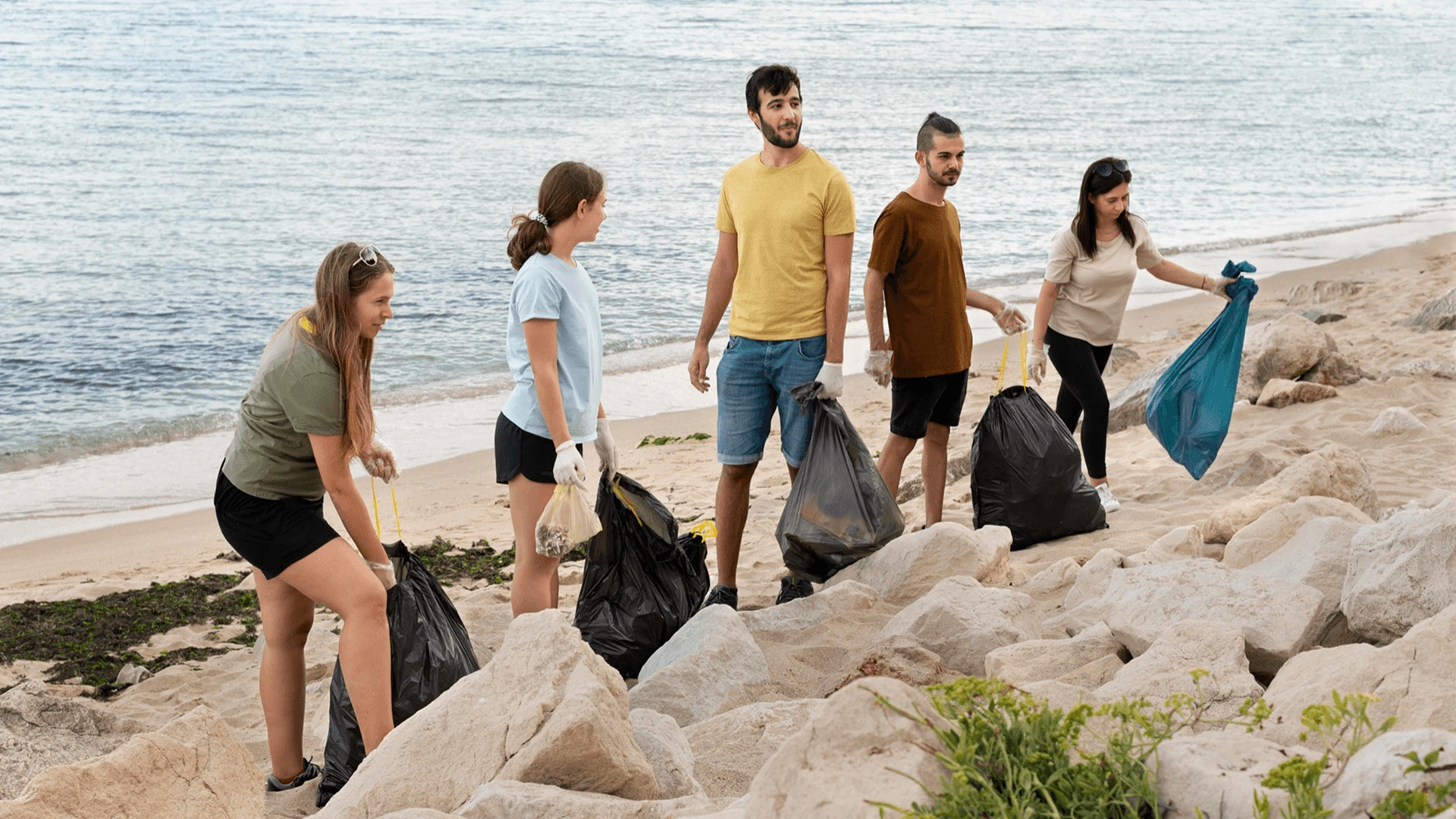
Beach cleanup
The most relevant and transparent format for an island. Cyprus lives by the sea, and the state of its coastline is a tangible, measurable task. The team heads to a chosen stretch of shore, runs an organised cleanup with sorting of what’s collected, and the result can be measured in concrete numbers — kilograms, bags, and length of coastline cleared.
The format works because it requires no special preparation, suits teams of any size, and delivers an immediately visible result. It’s organised in coordination with local municipalities and environmental initiatives, which help choose the site, arrange removal of what’s collected, and give the action official status. The best timing is spring and autumn, away from the summer heat.
Tree planting and land restoration
Cyprus regularly faces wildfires, and restoring green areas is a meaningful direction. Tree planting as a corporate format works in coordination with forestry services and conservation organisations, which identify suitable sites, provide saplings, and offer agronomic supervision.
This format is especially valuable symbolically: a tree lives for decades, and a company can return to “its” site year after year, watching it grow. That turns a one-off action into a long-term story tied to a place.
Local craft workshops and educational formats
Not every CSR activity involves physical work outdoors. Educational workshops — upcycling, recycling, conscious consumption, local craft and production — suit teams that value an intellectual component, or events held indoors. The format pairs well with conferences and off-site sessions as a meaningful module inside a business programme. Local craft workshops also channel support toward island artisans, adding a community dimension.
Charity and social initiatives
CSR isn’t limited to ecology. Socially meaningful formats — supporting local shelters, care homes, children’s facilities, preparing aid for those in need, volunteer days at local organisations — give the company direct contact with the island’s community. For a business working with the Cypriot market, this is a particularly valuable form of participation.
Hybrid formats
The most productive approach combines a useful activity with classic team dynamics. The morning is given to a beach cleanup or planting, the afternoon to a team lunch, reflection, and a lighter activity, the evening to an informal dinner. This way, the event delivers benefit to the environment, a full team experience, and isn’t perceived by the team as a formal obligation.
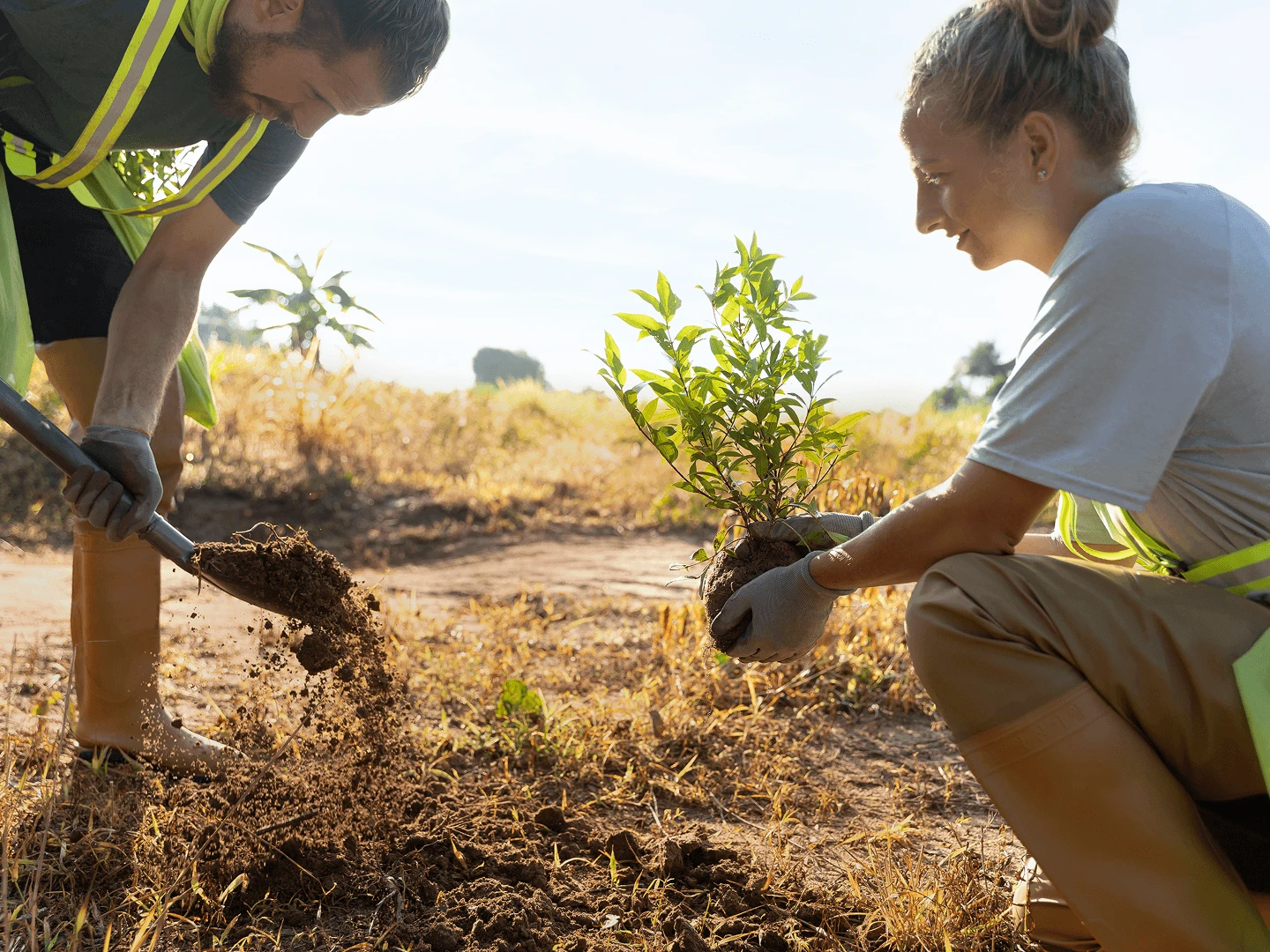
Company employees planting saplings during a post-wildfire land restoration project in Cyprus, coordinated with the forestry service.
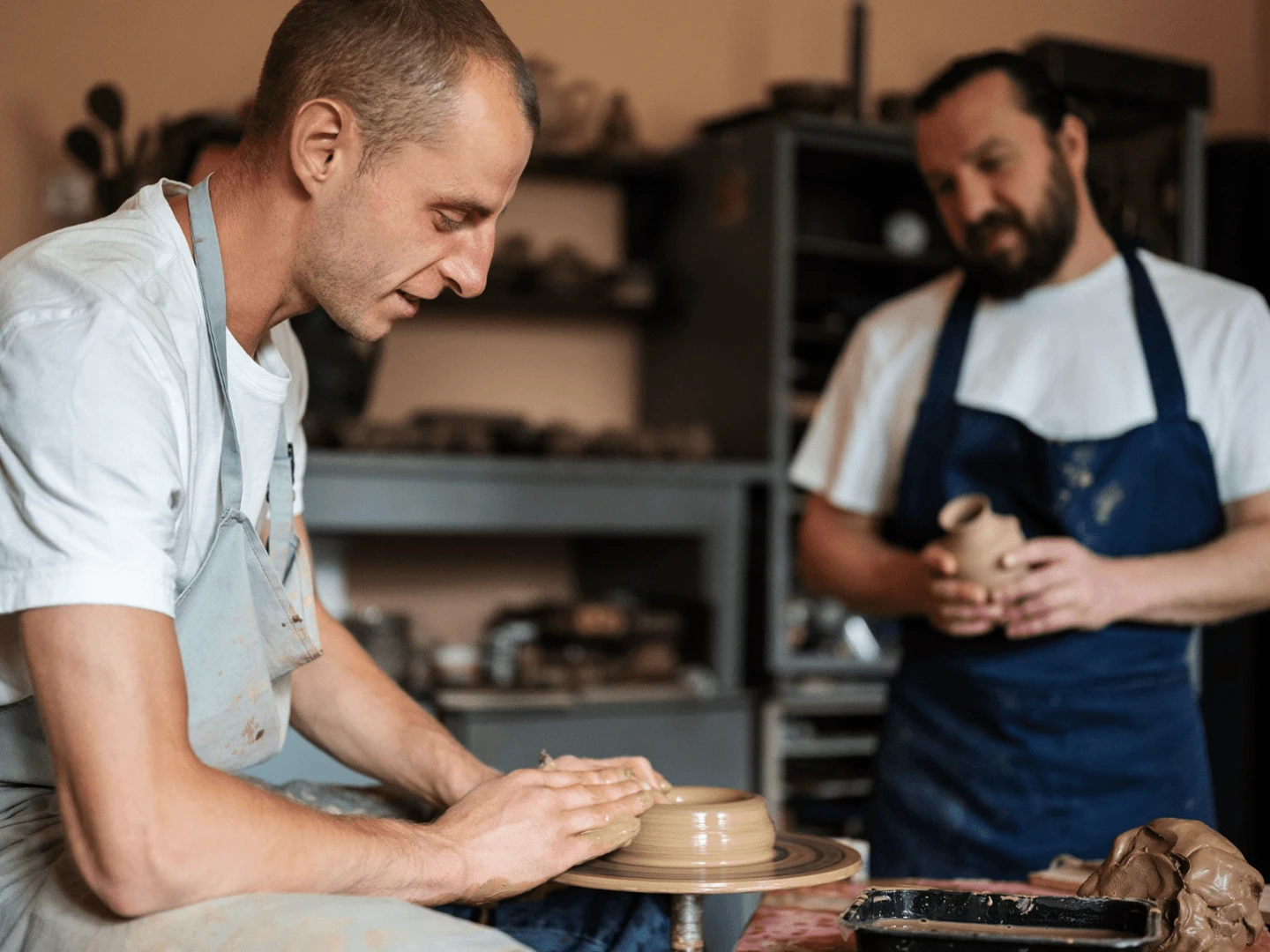
Local craft workshop as part of a corporate off-site session in Limassol, supporting island artisans.
How an eco event is organised
Eco-team building looks simple, but behind "a team cleaning a beach" stands a rigorous operational framework.
- Coordination with local partners. Beach cleanups, tree planting, volunteer days — all require coordination with municipalities, forestry services, or specialised organisations. They identify the sites, give the action official status, and arrange removal of what’s collected or provision of saplings. An unsanctioned, ad hoc cleanup without coordination and without a proper waste-disposal chain loses its point — the rubbish simply stays on site in bags.
- Logistics and equipment. Team transfer, gloves, tools, water, shade, canopies, portable facilities for large groups, an assembly and briefing point. For summer months, sun protection and the right timing (early morning or evening) are essential.
- Safety. Briefing, first aid, accounting for participants’ physical abilities, safety when working near water. For teams with children (family corporate days) — separate supervision.
- Measurable result. The main value of a CSR event for a company is the ability to record its contribution. How much was collected, how much was planted, which community was helped. These figures and photo materials become the basis for corporate communication and reporting, so capturing the result should be planned in advance, not remembered after the fact.
- Branding without greenwashing. Corporate branding at the event is appropriate, but in moderation. An eco action turned into a photoshoot with logos, where there’s less real benefit than display, reads as greenwashing, and works against reputation. The formula for sound CSR is this: real impact should always exceed the scale of its PR coverage.
What to avoid
A few common mistakes that turn a meaningful format into a formality:
- A tick-box exercise. If the only goal is photos for a report, participants feel it, and the bonding effect doesn’t work. The benefit has to be genuine.
- Unprepared logistics in the heat. A beach cleanup at midday in July isn’t team building — it’s an endurance test. Season and time of day are critical.
- No local partner. Without coordination with a municipality or specialised organisation, the action is either unsanctioned or its result (the collected rubbish) simply stays on site.
- Branding overload. When there are more logos at the event than actual work, it reads as PR rather than responsibility.
- One-off with no follow-up. The strongest effect comes from recurring initiatives, not a single token action. The same stretch of coastline or the same planting site, returned to year after year, builds reputation more powerfully than ten different one-off actions.

Are you planning an eco-team-building event or a CSR event in Cyprus?
We organise eco-team building and CSR events in Cyprus end-to-end

Common questions about eco-team building and CSR in Cyprus
What are eco-friendly team building ideas in Cyprus?
The main formats are organised beach cleanups, tree planting and post-wildfire land restoration, eco workshops (upcycling, recycling, conscious consumption), local craft workshops supporting island artisans, volunteer days at local organisations, and charity initiatives. The most productive option is a hybrid: a useful activity in the morning and a classic team programme in the afternoon. The choice depends on team size, season, and whether the company’s priority is an environmental or a social contribution.
How to organize a CSR event for my company?
Start with the goal: what the company wants to gain — a team effect, ESG material for reporting, a reputational contribution to the local community, or all at once. Then choose a format to match the goal and coordinate it with a local partner (municipality, forestry service, specialised organisation) — this gives the action official status and ensures real benefit. After that: logistics, safety, timing with the season in mind, and capturing a measurable result for later communication.
What’s the difference between eco-team building and CSR?
Eco-team building is a team event in which an environmental activity serves as the bonding tool; the main goal is the team. A CSR event is the company’s contribution to society and the environment, where team dynamics are a welcome side effect rather than the core objective. In practice, a well-organised project combines both dimensions: the team bonds, and the contribution remains real.
When is the best time for eco events in Cyprus?
Spring (April–May) and autumn (September–October) are optimal — comfortable temperatures, no summer heat, good conditions for outdoor work. Summer months are workable with early-morning or evening timing and mandatory sun protection. In winter, indoor formats are possible — workshops, educational modules, volunteer days at organisations.
Can eco-team building be combined with a business programme?
Yes, and it’s one of the most effective formats. An eco module or CSR activity fits well into an off-site session or conference as a meaningful block: for example, half a day of business content and half a day of team environmental activity. This diversifies the programme and adds a values dimension that purely business formats lack.
What to do next
Eco-team building and CSR events are a format where the corporate objective and real benefit stop contradicting each other. The team gets a meaningful shared experience, the company gains ESG material and a reputational contribution, and the island receives real help — measurable in kilograms collected or trees planted.
We organise eco-team building and CSR events in Cyprus end-to-end — from coordination with local partners and municipalities to logistics, safety, and capturing the results. If you’re planning a meaningful corporate event, get in touch for an initial consultation. We’ll start with your objectives — team, reputational, ESG — and design a format that delivers on all of them and leaves a real mark behind.
Last reviewed: June 2026. Terms for coordinating eco actions with municipalities and conservation organisations may change — confirm current requirements and options when planning your event.